

Emirates airline history: from inception to today
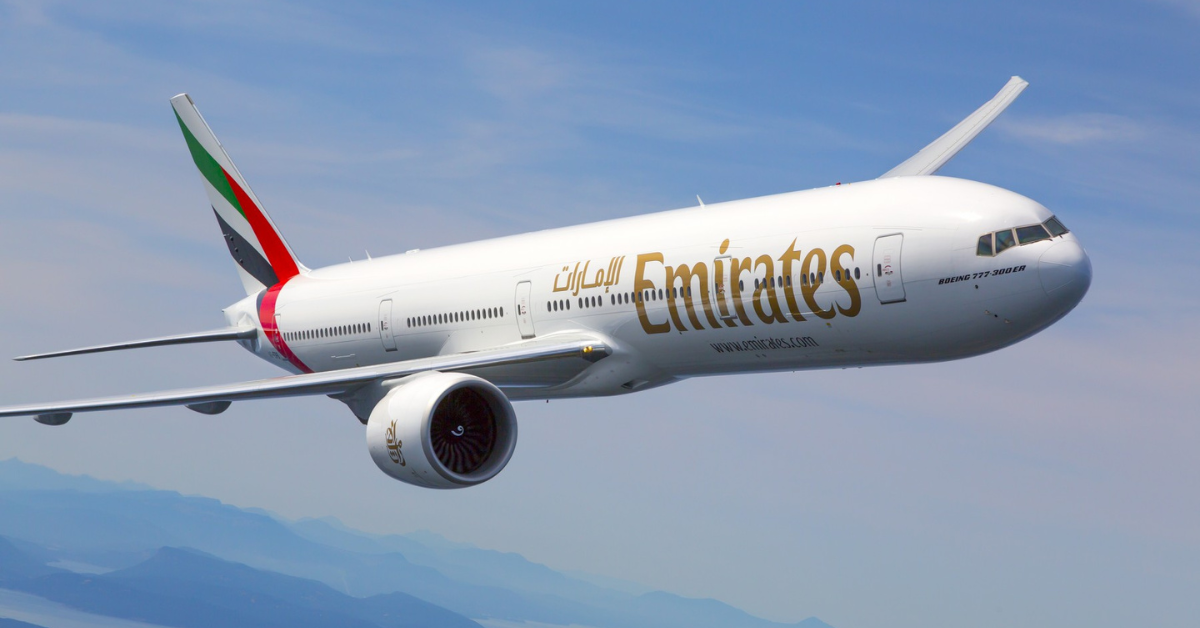
Discover the fascinating history of Emirates, Dubai's airline. The airline has become a major player in the aviation sector, propelled by continuous development under the authority of the Government of Dubai. This article explores the key moments in its development, from its creation in 1985 to its current status as world leader. You'll discover how the company developed and why it is now one of the world's most respected airlines.
Emirates' beginnings in 1985
Emirates was founded in 1985 by the Dubai government, at the instigation of Sheikh Mohammed Bin Rashid Al Maktoum, now Emir of Dubai. At the time, the city was looking to develop an airline to accompany its economic growth, and to break away from its dependence on Gulf Air, the region's main airline at the time. Two aircraft were leased to get the ball rolling: a Boeing 737 and an Airbus 300B4. The first commercial flight took place on October 25, 1985, linking Dubai to Karachi, and the company gradually expanded to South Asia and other destinations.
The initial idea was to develop an airline that would offer excellent customer service, while providing regional connectivity. Emirates quickly made its mark in a highly competitive market.
The 1990s: rapid expansion
In the 1990s, Emirates accelerated its international expansion. The company added major destinations such as London, marking its entry into the European market. In addition to new routes, it also invested in a modern fleet.
In 1996, Emirates integrated its first Boeing 777, an aircraft synonymous with comfort and long-haul flights. This addition enabled the airline to serve more distant destinations and improve the quality of its on-board services. Emirates has always emphasized the passenger experience, whether in economy, business or first class.
The Airbus A380: a major turning point in 2008
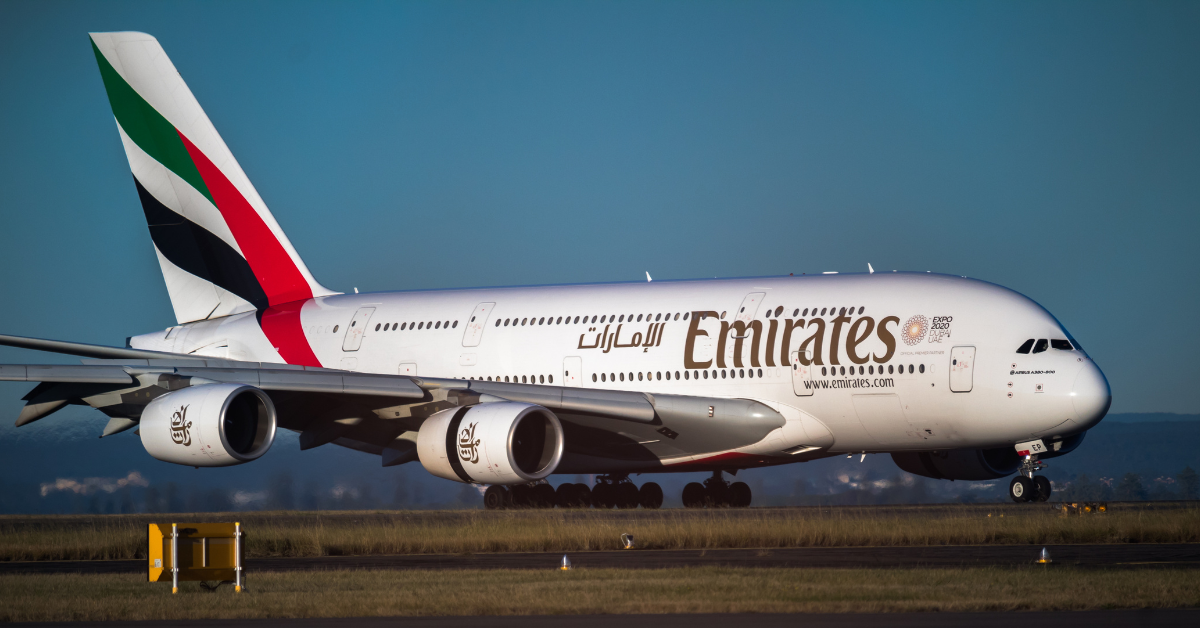
2008 saw the introduction of the famous Airbus A380 into the Emirates fleet. With over 100 A380s in service, Emirates is now the world's largest operator of this aircraft. The Airbus A380 has reinforced Emirates' reputation as an airline offering unrivalled luxury, notably thanks to its private suites, on-board showers and exclusive lounges.
The arrival of this aircraft has enabled Emirates to improve efficiency on high-demand routes and strengthen its positioning in the premium segment. Passengers enjoy an exceptional flying experience, and the airline has differentiated itself through the quality of its on-board services.
A rapidly expanding global network
Today, Emirates serves over 150 destinations on six continents. The airline is renowned for the quality of its in-flight services, its varied entertainment options and its comfortable seats. Emirates' award-winning "ice" (Information, Communication, Entertainment) entertainment system offers a wide range of films, series and games.
In addition to its geographical expansion, Emirates has also forged strategic partnerships with other airlines to improve global connectivity. This enables Emirates to offer its passengers fast, efficient connections around the world.
The close ties between Emirates and Dubai
Emirates' success is closely linked to that of Dubai. The city is an international crossroads, linking Europe, Asia and Africa. Emirates has leveraged this strategic location to attract transit passengers, reinforcing Dubai International Airport's (DXB) role as one of the world's leading hubs.
Today, this airport is one of the busiest in the world, and Emirates is its main user. DXB's excellent infrastructure enables the airline to offer fast connections, while providing passengers with a premium travel experience.
Overcoming the challenges of the airline industry
Like any airline, Emirates has faced many challenges over the years. The COVID-19 pandemic had a major impact on the global airline industry, and Emirates was not spared. However, the company reacted swiftly, adjusting its offer and implementing safety measures to protect its passengers.
Despite this difficult period, Emirates has managed to maintain its leadership position by adapting to new traveler expectations. The company has accelerated its digital transition, offering contactless services at the airport and more flexible booking management.
A commitment to sustainability
Emirates also makes a point of reducing its carbon footprint. The company invests in modern, fuel-efficient aircraft to limit its environmental impact. Its fleet, comprising Boeing 777s and Airbus A380s, is one of the youngest and most efficient in the sector.
Emirates also participates in global initiatives to promote sustainability, focusing on waste reduction and resource optimization. This includes recycling materials on board and using environmentally-friendly products in its services.
Emirates today: an innovative and prestigious airline
Today, Emirates continues to innovate to offer its passengers an exceptional travel experience. Whether for business or pleasure, Emirates has become the benchmark for long-haul flights. Its global network, modern fleet and premium services keep it at the forefront of the airline industry.
Emirates' commitment to service quality and its investment in cutting-edge technology make it one of the world's most respected airlines. Its success is undeniably linked to its ability to adapt and its central role in the development of Dubai as a global destination.
Conclusion
Since its beginnings in 1985, Emirates has enjoyed spectacular growth, becoming one of the world's leading airlines. Its story is one of impressive success, marked by continuous innovation and a determination to push back the boundaries of the airline industry.
Today, Emirates is much more than just an airline. It embodies luxury, innovation and excellence in air services. For those looking to travel in the best conditions or to explore Dubai, Emirates remains an unavoidable choice.

Guillaume Giroux, Dubai Immo founder and real estate expert, Dubai, UAE
As founder of the Dubai Immo Group and a real estate investor, I bring you daily updates on the Dubai market. My aim is to provide you with all the keys you need to invest wisely and securely, by sharing my in-depth analysis and strategic advice.